We buy Lakewood houses, doubles and condos for cash, as-is.

Lakewood isn't one housing market, it's three — century-old singles, two-family doubles with a tenant upstairs, and Gold Coast condos with an association attached. Each one sells differently. We buy all three, as they sit.

  • Lakewood 44107
  • Cuyahoga County
  • Singles · doubles · condos
7 daysFastest realistic close once the city signs off
$0Commissions, repairs or escrow from your proceeds
Pre-1940When most of Lakewood was actually built

Tell us about the Lakewood property

Street, property type, and whether anyone's living in it. A local buyer looks it over and calls you back with a real number and the reasoning behind it.

Your details stay with us. We never sell or resell leads.

How do I sell a house or double in Lakewood, Ohio fast?

Send a local cash buyer the address, get a written offer after a walkthrough, and close at an Ohio title company in as little as a week. What sets Lakewood apart from the rest of the west side is that the property type drives the process: a single family goes through the city's pre-sale inspection, a two-family double adds rental registration and tenant obligations that transfer with the deed, and a Gold Coast condo waits on association documents and any unpaid assessments. Selling for cash means the buyer absorbs all three of those — no repairs, no commission, no escrow out of your proceeds — in exchange for a price below full retail.

Sell Fast Buyers Cleveland buys in Lakewood, Rocky River, Cleveland's west side, Fairview Park, Westlake and across Cuyahoga County.

Start here

There are three Lakewoods, and they don't sell the same way.

Five and a half square miles, roughly fifty thousand people, and one of the densest housing footprints in Ohio. Inside it sit three very different products. Find yours below — the rest of this page goes deeper on each.

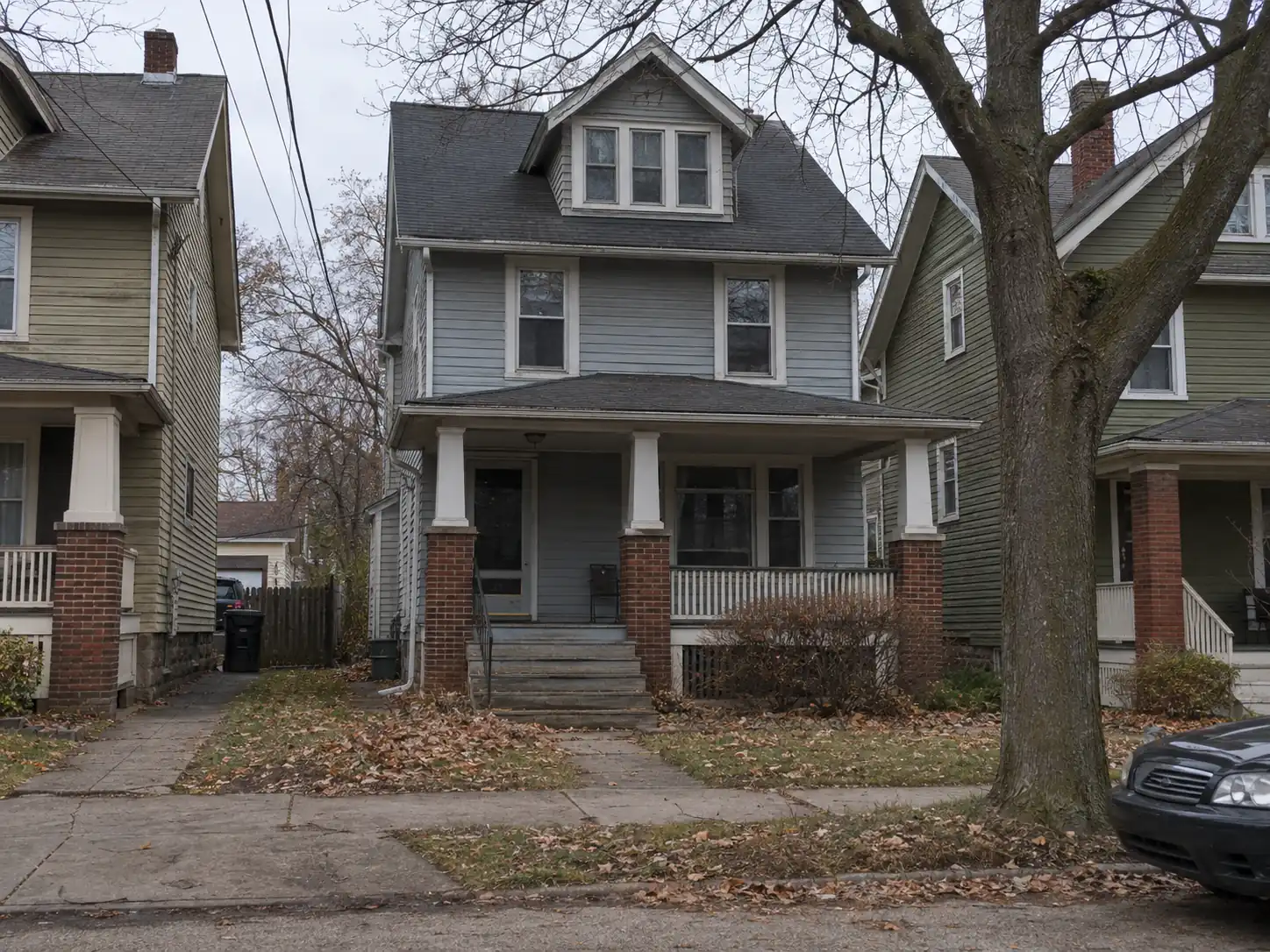
Early-1900s wood frame single family house in Lakewood, Ohio with a covered front porch on brick piers and a narrow shared driveway

The century single

Bunts, Warren, Clifton Park, west of Belle

Colonials, bungalows and foursquares built between about 1905 and 1930. Hardwood, plaster, high ceilings, and mechanical systems that have been patched rather than replaced for four generations.

What slows the sale
The city pre-sale inspection, plus knob-and-tube, galvanized supply lines and a slate or multi-layer roof that a retail buyer's lender may refuse.
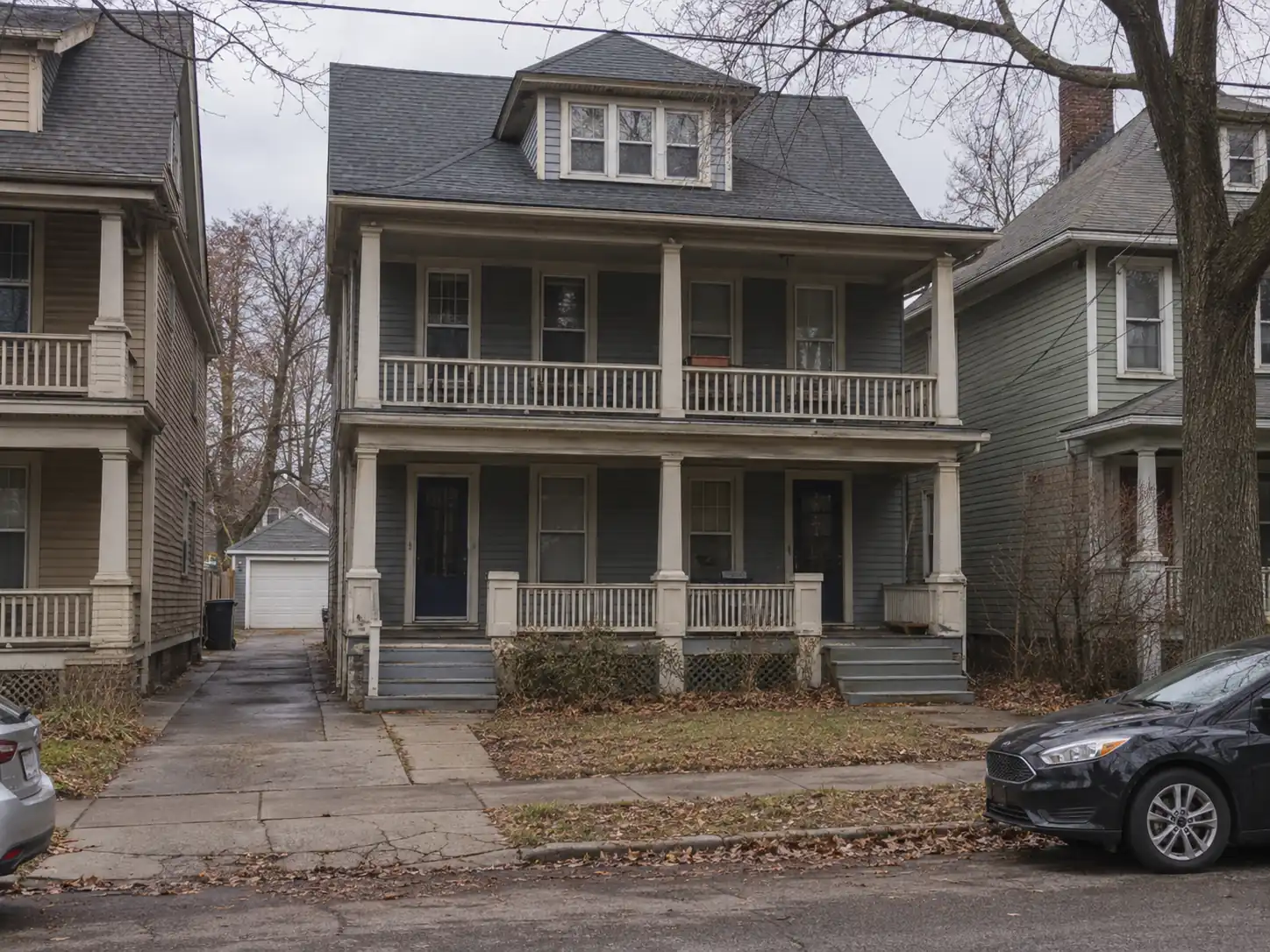
Lakewood two-family double with stacked upper and lower front porches, two separate entrances and a shared driveway to a rear garage

The two-family double

Madison corridor, Birdtown, Detroit & Hilliard

Lakewood's signature building: up-and-down duplexes, often bought by an owner who lived in one half and rented the other. Thousands of them, and roughly half of Lakewood households rent.

What slows the sale
Rental registration and inspection status, leases and security deposits that pass to the buyer, and a tenant who has to be dealt with rather than avoided.
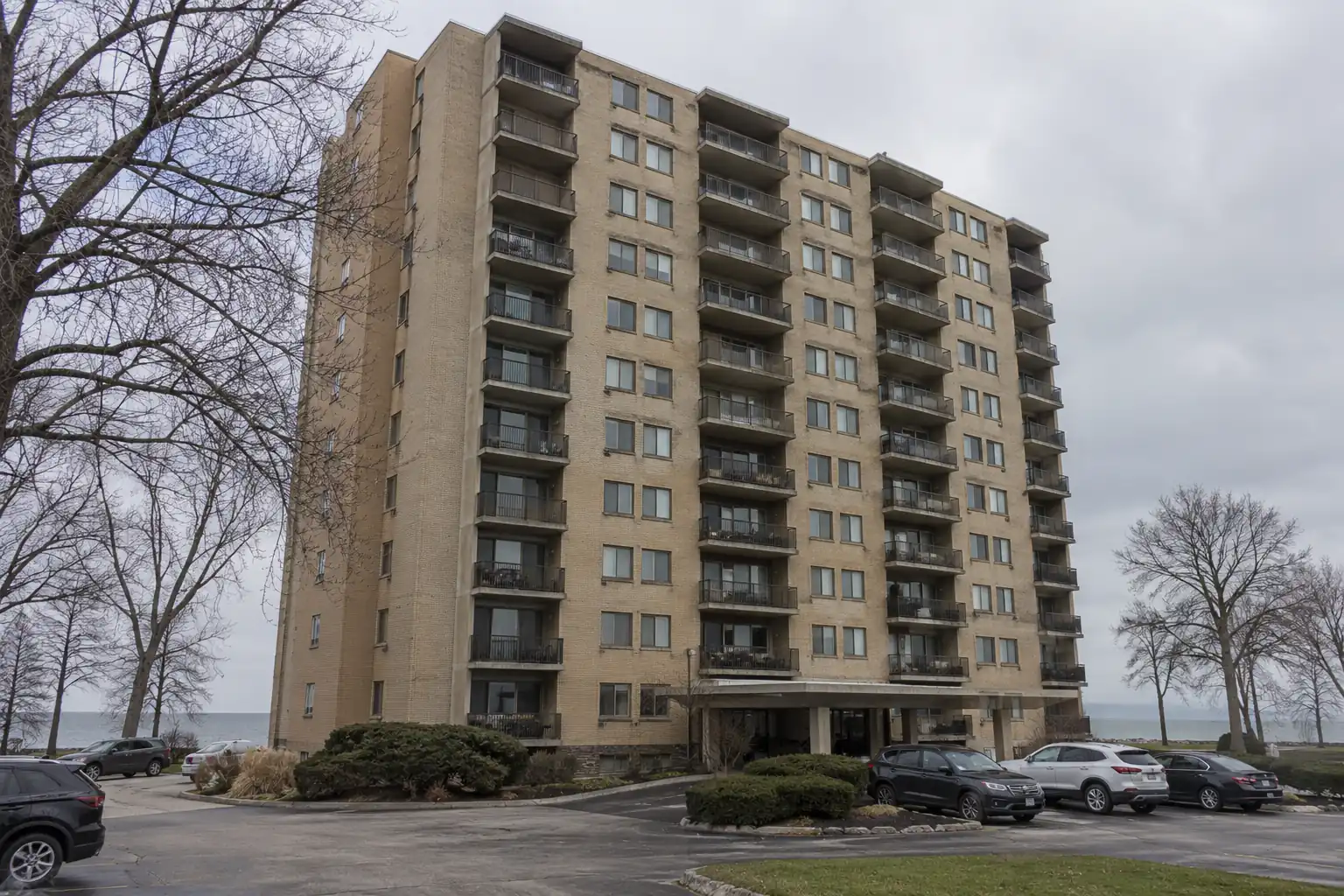
Mid-century buff brick lakefront condominium tower with projecting balconies on Lake Erie in Lakewood, Ohio

The Gold Coast condo

Lake Avenue, Edgewater Drive, Clifton

Mid-century and 1970s lakefront towers with real views and real association structures. Often owned for decades by one household, and often inherited by children who live elsewhere.

What slows the sale
Association resale documents, unpaid or accruing assessments, and special assessments for building envelope, elevator or garage work.
The Lakewood double

Selling a double with a tenant upstairs is a different transaction.

Most agents will tell you to get the unit vacant first. That advice costs Lakewood owners months, and sometimes it isn't legally simple to do. We buy occupied — but you should understand what actually transfers with the building, because it surprises people at the closing table.

The lease doesn't end because the building sold

A tenant with a valid lease generally stays under it after transfer. The buyer steps into the landlord's shoes for the remainder of the term. That's not a problem for us — it is a problem for a retail buyer who wanted to move in on closing day.

Security deposits follow the property, not the seller

Under Ohio's landlord-tenant law the deposit obligation runs with the rental. If you're holding a deposit you took eight years ago, it gets accounted for at closing rather than quietly kept. Bring the ledger and the leases to the first conversation.

Ohio Rev. Code Chapter 5321

Rental registration and inspection status matters

Lakewood requires rental property to be registered with the city and inspected on a cycle. If registration lapsed or an inspection is outstanding, that surfaces during the sale. Confirm your status with the city — or tell us and we'll work with what's actually on file.

Pre-1978 rentals carry lead obligations

Nearly every Lakewood double predates 1978, so federal lead disclosure applies and rental lead requirements may too. It's one of the most common reasons small landlords decide they're finished. The obligation transfers with the building to us.

What comes with the building when we buy it

  • Existing leases, on their existing terms
  • Security deposits, accounted for at closing
  • Tenants behind on rent, with no requirement that you collect first
  • An eviction already filed, finished or not
  • Registration, inspection and lead obligations on the units
  • Deferred maintenance in both halves, priced in up front
  • The conversation with the tenant. You don't have to have it.

General information about how these sales usually work, not legal advice. Landlord-tenant obligations are specific to your leases and your situation — talk to an attorney about yours.

Gold Coast condos

A lakefront condo sale runs on the association's timeline, not yours.

Lake Avenue and Edgewater Drive hold some of the best views in Northeast Ohio, in buildings that are now fifty and sixty years old. When a unit comes to market — usually after a death or a move to care — the association paperwork is what decides how fast it closes.

What the association has to produce before a sale

Names vary building to building. Your management company will know these by their own terms.

  1. Declaration and bylawsIncluding any rental caps or restrictions that affect who can buy.
  2. Account status for the unitCurrent dues, arrears, late fees, and anything already certified as a lien.
  3. Special assessments, levied or plannedRoof, windows, balconies, elevators, garage deck. The big ones on older towers.
  4. Reserve and budget informationWhat a lender looks at, and what tells you whether more assessments are coming.
  5. Insurance certificateMaster policy coverage and what the unit owner is responsible for.

Unpaid assessments don't just disappear at closing. Under Ohio condominium law an association can record a lien against a unit for unpaid common expenses. When a unit has sat vacant through a probate, the dues have usually been accruing the entire time — and families are often unaware until the payoff figure comes back.

That's a solvable problem. Assessments and liens are paid from the sale proceeds at the title company, the same as a mortgage or a tax balance. What it isn't is a surprise you want to discover four days before a closing date you promised someone.

We buy units that would struggle to sell conventionally: original 1970s kitchens and baths, buildings mid-way through a major assessment, units where the reserves or owner-occupancy ratio make a lender nervous, and estates where no one has been inside in two years.

Ohio Rev. Code Chapter 5311 — confirm specifics with your association and an attorney
Why Lakewood houses are their own thing

Built close together, a hundred years ago, on lots that assumed nobody owned two cars.

Density is what makes Lakewood walkable and desirable. It's also what makes these houses expensive to work on and awkward to sell. Here's what we're actually looking at when we price one.

The shared driveway

Two houses, one strip of concrete, and an easement recorded sometime around 1922 — or never recorded at all. Title issues around shared drives and encroaching garages are one of the most common reasons a Lakewood closing gets delayed. We deal with them regularly and don't walk over them.

Parking, or the lack of it

Plenty of homes here have no off-street parking at all, and the city restricts overnight on-street parking. It's a real factor in what a house is worth and who will buy it — and it's already in our number, not a reason to re-trade you later.

Six feet between you and the neighbor

Tight setbacks mean scaffolding, dumpsters, roof tear-offs and excavation all cost more here than they do in Westlake. It's the single biggest reason a Lakewood renovation budget runs above the same work in an outer suburb.

Slate, tile and multi-layer roofs

Beautiful, original, and frequently at the end of a very long life. Replacement is a five-figure decision, and an insurer may decline coverage over roof age before a retail buyer ever gets to closing.

Century-old systems behind plaster

Knob-and-tube, 60-amp service, galvanized supply, clay laterals and a boiler that's been "fine" since 1974. In a plaster house every one of those repairs is invasive, which is exactly why a renovated Lakewood comp is not a comp for an untouched one.

Its own water department

Lakewood runs its own municipal water system rather than buying from Cleveland. Practically, that means the final billing and any delinquent balance are handled by the city, not the regional utility. Confirm your account status with Lakewood before closing — we'll settle whatever is owed from proceeds.

Where we buy

Every corner of 44107.

Lakewood is small enough that we know the blocks, not just the streets. A few of the areas we buy in most often.

The Gold CoastLake Avenue & Edgewater Drive

The lakefront high-rise strip — one of the densest residential corridors in Ohio. Mostly condos, long-tenured owners, and estates where the unit hasn't been updated since it was bought. Views that sell themselves once the association paperwork is sorted.

BirdtownMadison Avenue & the bird streets

Lakewood's oldest working neighborhood, built for the men who worked the nearby plants, and a listed historic district. Small frame houses and doubles on narrow lots. Deep character, small footprints, and the oldest systems in the city.

Clifton ParkNorth of Clifton Boulevard

The historic enclave along the lake with its own private association and some of the largest houses in the city. Rarely trades, rarely needs us — but when a large old house here needs six figures of work, a cash sale often nets more than a long listing.

Downtown LakewoodDetroit Avenue

The commercial spine, and the streets running off it in both directions. Classic Lakewood: doubles and singles side by side, walkable to everything, and the highest concentration of small landlords in the city.

The Madison corridorMadison Avenue to the Cleveland line

Denser, more affordable, and heavily two-family. This is where most of the tired-landlord calls come from — owners who bought one or two doubles decades ago and are now managing them from another state or another decade of life.

West End & the Rocky River lineBunts, Warren, west of Belle

Larger colonials on slightly deeper lots, strong buyer demand, better schools reputation, and the highest retail values in the city. If your house here is in good shape, we'll often tell you to list it — and we'll say why.

We also buy in Rocky River, Fairview Park, Westlake, Bay Village, and across Cleveland's west side — Edgewater, Detroit-Shoreway, West Park and Kamm's Corners. Send the address and we'll confirm the same day.

Ranked by how often we see it

Five things that actually delay a Lakewood closing.

None of these are about the buyer's money. They're about paperwork nobody thought to start early. If you tell us about them on the first call, most of them stop mattering.

  1. The city pre-sale inspection queue

    Lakewood, like most inner-ring suburbs, inspects residential property before transfer and issues a violation report. Scheduling it — not fixing it — is usually the longest single step. Book it the day you decide to sell, not the day you go under contract.

    Days to weeks
  2. Missing leases, ledgers and deposit records

    On a double, the title company needs to know what each tenant pays, what deposit is held, and what the term is. Owners who managed informally for twenty years often have none of it written down, and reconstructing it takes longer than anyone expects.

    Days to weeks
  3. Association documents and assessment payoffs

    Condo management companies work on their own schedule, and the payoff figure for accrued dues can take longer to produce than the entire rest of the file. Request it the week you list or accept an offer.

    1–3 weeks
  4. Shared driveway and encroachment title exceptions

    A garage half over the property line, a drive with no recorded easement, a fence three feet into next door. The title company flags it, and resolving it means an affidavit, a survey, or a neighbor's signature. Lakewood produces more of these than any suburb we work in.

    1–4 weeks
  5. Probate that nobody started

    An owner died, the family kept paying the taxes, and no estate was ever opened. The house can't transfer until authority to sell exists. Ohio has shortcuts for smaller estates, but they still take time — and the clock only starts when someone calls a probate attorney.

    Weeks to months
Lakewood seller questions

What owners here ask before they sell.

Yes. You don't need to give notice, wait out a lease, or finish an eviction first. A tenant with a valid lease generally continues under it after the sale, and the buyer takes over as landlord — which is a dealbreaker for someone who wanted to move in, and a non-issue for us. Bring the leases and whatever rent and deposit records you have, since security deposit obligations follow the property and get accounted for at closing.

Lakewood, like most Cuyahoga County inner-ring suburbs, runs a pre-sale inspection process and separately requires rental property to be registered and inspected. The city issues a violation report and expects the items addressed before transfer. Programs and fees change, so confirm current requirements with the city's building or housing department. When you sell to us, the violation list becomes ours as the buyer — you don't fund repairs or an escrow.

We buy condos on Lake Avenue, Edgewater Drive and Clifton, including units with original kitchens and baths, units in buildings partway through a major special assessment, and units where accrued dues have been building through a probate. Unpaid assessments and any association lien are paid from proceeds at closing, the same as a mortgage. Start requesting the association's resale documents early — that's usually the long pole.

It's common here and it's workable. Title companies see shared drives, garages over the line and old fences constantly in Lakewood, and they're usually resolved with an affidavit, a survey or a boundary agreement. It's worth mentioning on the first call so the title work can start early rather than surfacing the week you hoped to close. It won't stop us from buying.

Usually. On a century-old Lakewood double those three jobs together are a serious number before you touch a kitchen, and doing invasive work in a plaster house with a tenant in the other unit is harder and slower than the estimate suggests. We price the work in up front and don't reduce the offer afterward. Get a contractor quote anyway — comparing it against our number is exactly how you should make this decision.

If it's a solid single family west of Belle or in Clifton Park in reasonable condition, quite possibly — Lakewood has genuine retail demand and we'll tell you so rather than pretend otherwise. Listing tends to lose to a cash sale when the house needs major systems, when a tenant is in place, when the inspection report is bad, or when the family needs a certain closing date more than they need the last few percent.

We can make an offer and get it under contract, but nothing transfers until someone has authority to sell. Ohio has faster routes for smaller estates, and a recorded transfer-on-death affidavit avoids probate entirely. The practical advice: call a probate attorney this week rather than next month, because that's the step that sets the whole timeline. Our title company will coordinate with them.

No commission, no repair costs, and we cover standard seller closing costs. What does come off is what's already owed against the property: mortgage payoff, prorated Cuyahoga County taxes, any liens, delinquent Lakewood water balances, condo assessments if applicable, tenant security deposits credited to the buyer, and the county conveyance fee. Ask for the estimated settlement statement before you sign — every figure should be in writing.

Very little. We can walk the property with a neighbor, a family member or by video, and Ohio title companies close routinely with mobile or remote notaries and overnighted documents. Funds are wired. You don't need to clear out the house, meet a contractor, or fly in for a showing. If there are tenants, we take the leases as they are and handle communication with them from closing forward.

Free, nothing to sign, and yes — please do. Get a listing opinion from a good Lakewood agent and compare the two numbers with the repair list, the commission and the carrying months included. We'd rather you decide with both figures in front of you. If listing wins for your property, we'll say that out loud.

Get a cash offer on your Lakewood property.

Tell us the address, the property type, and whether anyone's living in it. We'll pull the parcel, look at it, and come back with a real number and the reasoning behind it — usually within a day of the walkthrough.

  • Singles, two-family doubles and Gold Coast condos
  • We buy occupied — leases, deposits and evictions come with the building
  • The city inspection list becomes ours, not an escrow from your proceeds
  • Association assessments, liens and back taxes settled at closing
  • No commissions, no repairs, and a closing date you choose

Sell Fast Buyers Cleveland is a private real estate investment company that purchases property directly from owners. We are not a licensed real estate brokerage and do not list homes for sale. Offers are made property by property after review and are not guaranteed. Municipal inspection and rental registration requirements, association obligations, county fees and statutory references described on this page are general information current at the time of writing and are set by the relevant city, association, county or state — confirm details with the applicable authority. Landlord-tenant and probate matters depend on your specific documents and circumstances. Nothing on this page is legal, tax or financial advice.