We buy houses in Cleveland Heights and Shaker Heights, cash, as-is.

Beautiful 1920s houses with slate roofs, leaded glass, plaster walls — and repair bills that outrun what the market will pay. We buy them exactly as they stand, including the ones a retail buyer's inspector just walked away from.

  • Cleveland Heights 44118 · 44106 · 44112 · 44121
  • Shaker Heights 44120 · 44122
  • Cuyahoga County
7 daysFastest realistic close once the city signs off
$0Commissions, repairs or escrow from your proceeds
1910–1930When both Heights were largely built

Tell us about the Heights property

Street, city, and what's actually wrong with it — roof, boiler, plaster, all of it. A local buyer looks it over and calls you back with a real number and the reasoning behind it.

Your details stay with us. We never sell or resell leads.

How do I sell an older house in Cleveland Heights or Shaker Heights?

Send a local cash buyer the address, get a written offer after a walkthrough, and close at an Ohio title company in as little as a week. The Heights are different from the rest of Cuyahoga County in three specific ways: the housing stock is large, ornate and expensive to repair; both cities inspect residential property before transfer and expect the violation list resolved; and property tax rates here are among the highest in the county, which is what makes a vacant or inherited house so costly to hold. A cash sale removes the repair list, the commission and the holding clock — in exchange for a price below a fully renovated retail sale.

Sell Fast Buyers Cleveland buys in Cleveland Heights, Shaker Heights, University Heights, South Euclid, Beachwood and across Cuyahoga County.

The Heights problem

The house is worth a lot. Fixing it costs more than that.

This is the arithmetic that traps Heights owners. A 1925 center-hall colonial on a good street is genuinely valuable — and the work it needs after a century is genuinely enormous. When the repair list gets close to the value gap between as-is and renovated, the house stops selling conventionally. Here's what's usually on that list.

Slate or tile roofFive figures
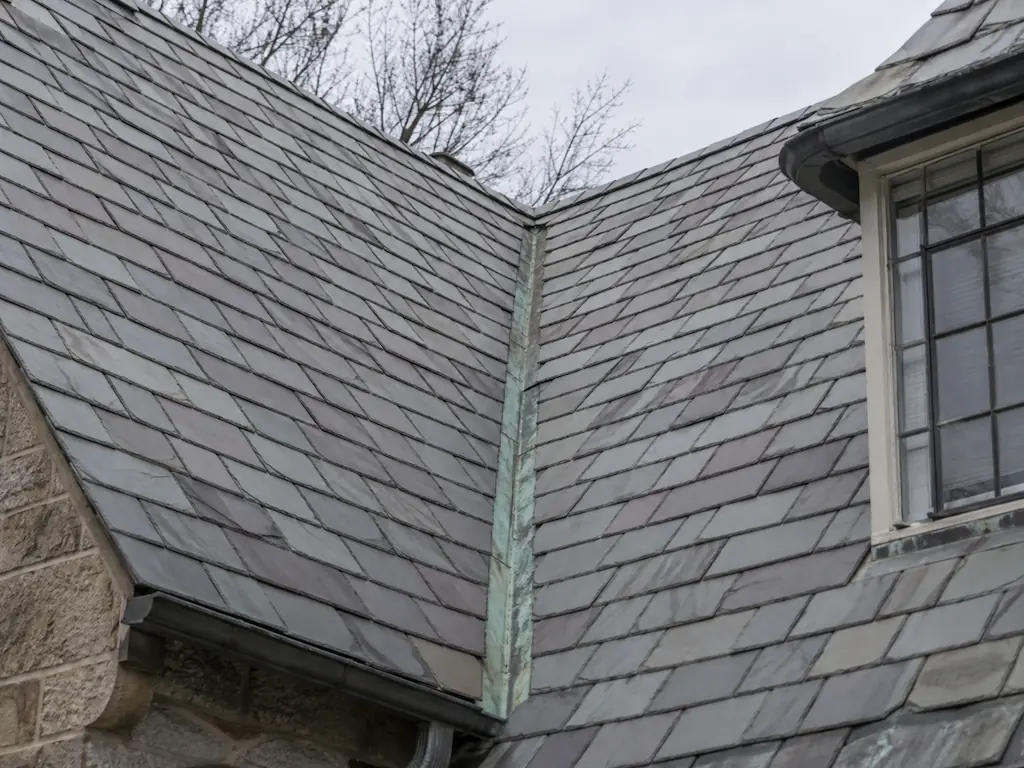
Aging slate roof valley with weathered copper flashing on a 1920s Heights house

The one that ends most deals

Original slate lasts a century, then it doesn't. Replacement in kind is enormously expensive and asphalt changes the look of the house. Meanwhile insurers increasingly decline coverage on roof age alone, which kills a mortgage buyer before closing.
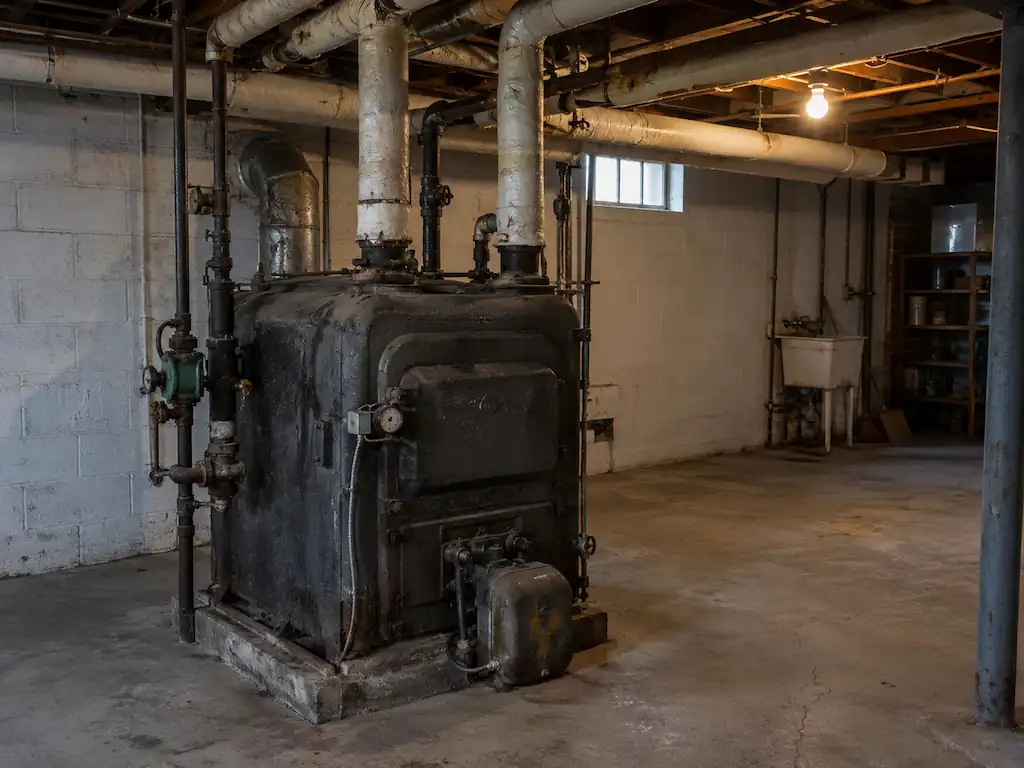
Boiler and radiator heatFive figures
Original cast iron boiler with insulated steam pipes in the basement of a century-old Cleveland Heights house

No ductwork anywhere

Most of these houses were built with steam or hot-water heat and have never had air conditioning. Adding it means either high-velocity systems threaded through plaster walls or a compromise nobody loves. Replacing a failed boiler alone is a major expense.

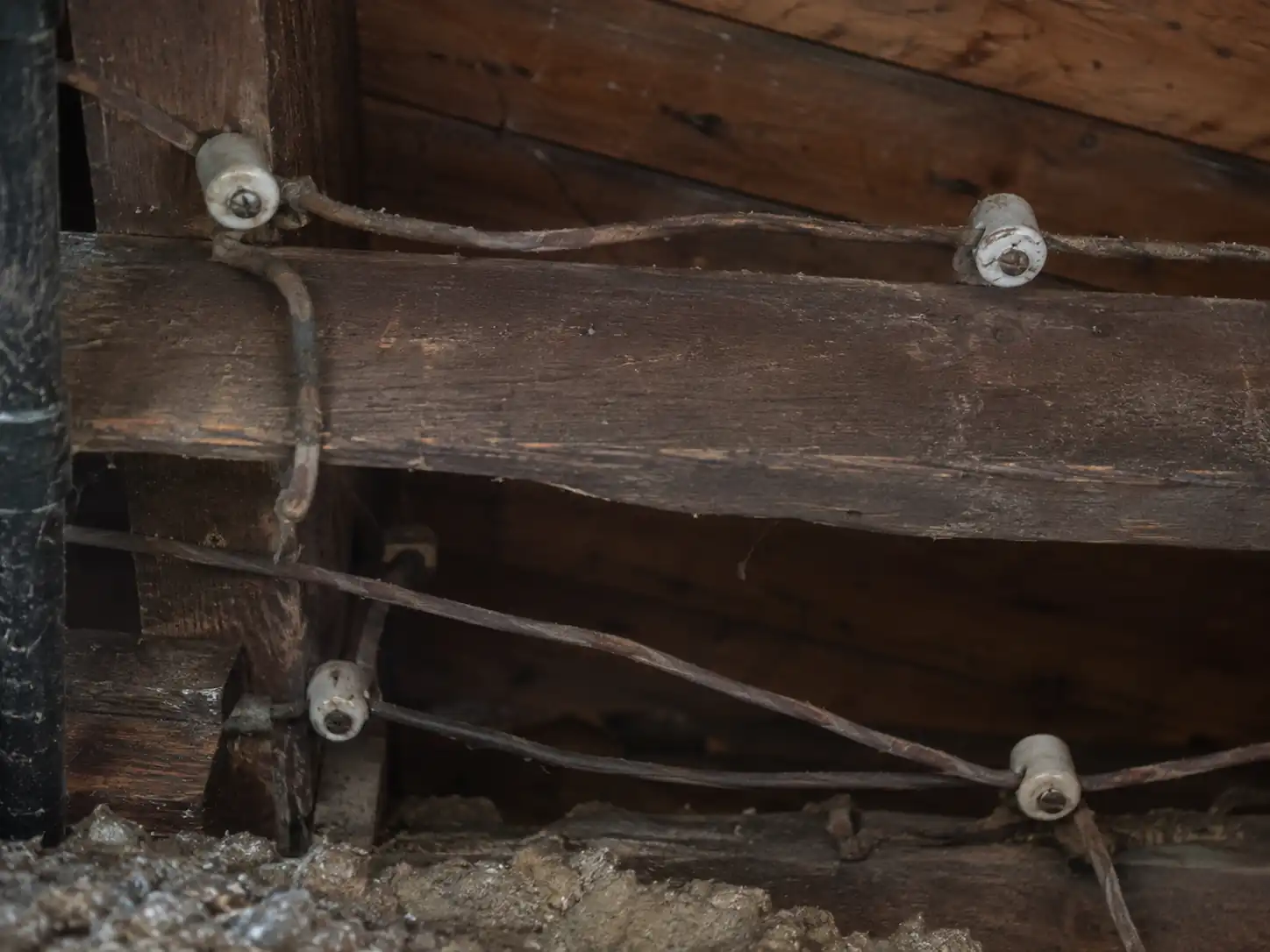
Knob-and-tube and 60-amp serviceFive figures
Exposed knob-and-tube wiring on ceramic insulators between wood framing in an old Shaker Heights attic

Rewiring a plaster house

Every run means opening walls that are lath and plaster, not drywall. Some insurers won't write a policy over active knob-and-tube at all, and a lender's appraiser may flag the service size. It's the most invasive work in the house.

Original windows and stormsFive figures
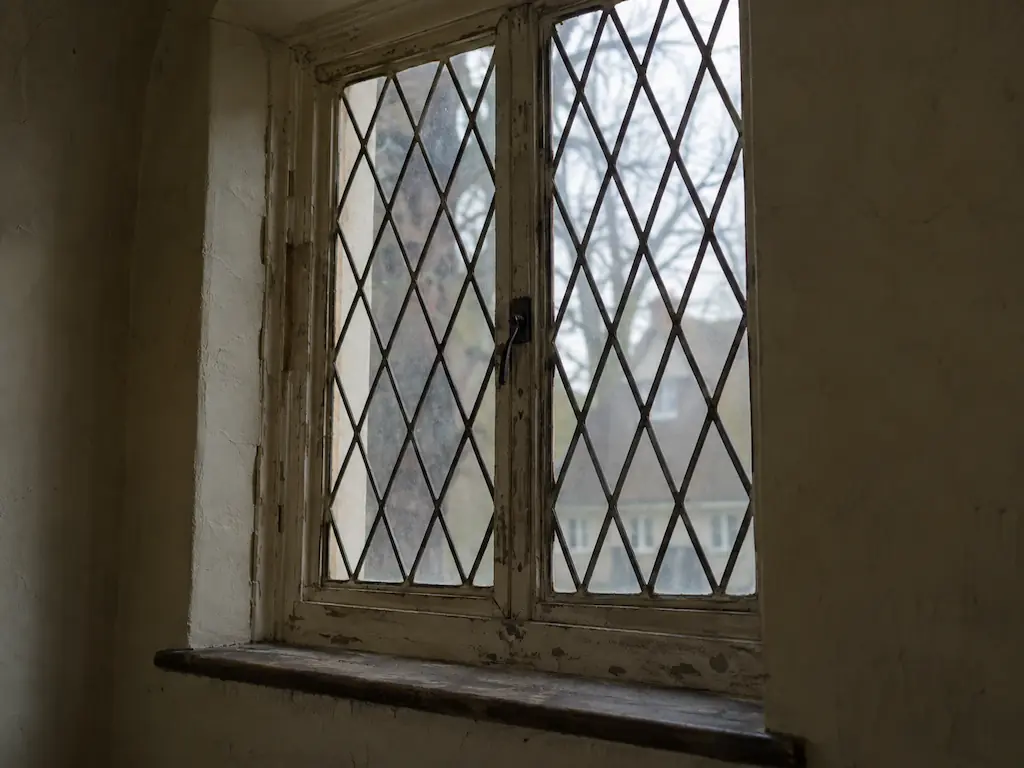
Original leaded glass diamond-pane casement window with peeling paint in a 1920s Heights house

Forty openings, all different

Leaded glass, divided lights, wood casements and a set of storm windows that went missing decades ago. Restoration is the right answer architecturally and an expensive one financially, especially where review boards discourage replacement.

Tuckpointing and chimneysFour to five figures
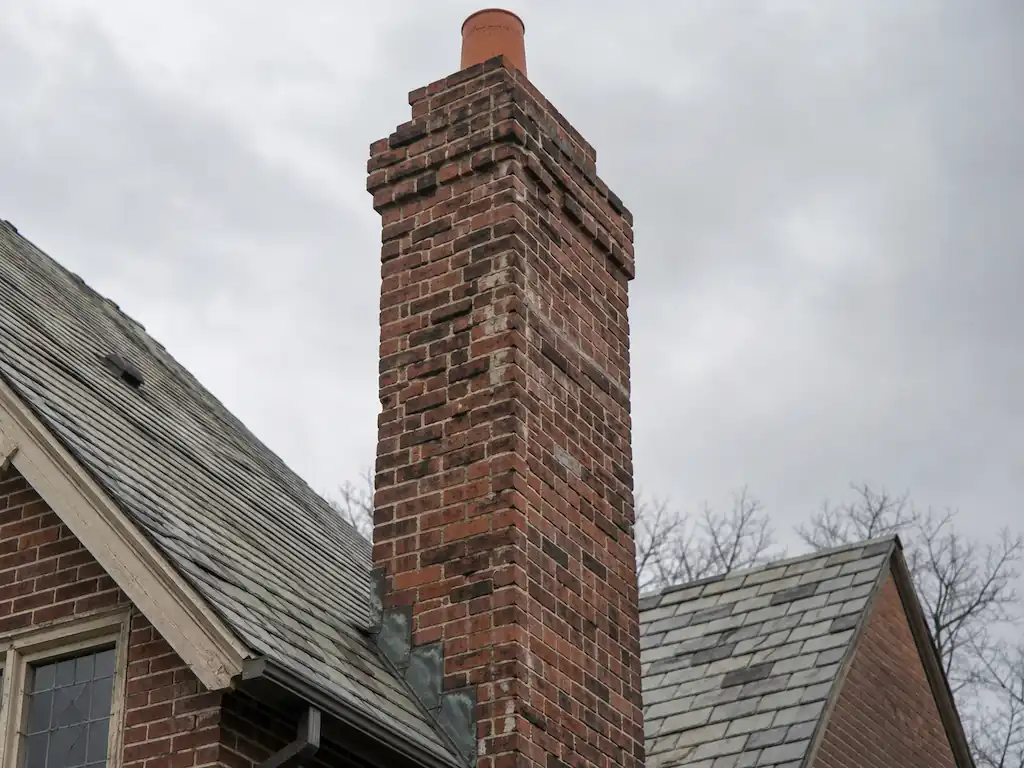
Tall brick chimney with deteriorating mortar joints rising through a slate roof on a Heights Tudor

A century of freeze-thaw

Brick and stone that has taken a hundred Cleveland winters, plus two or three chimneys that were built for coal and now vent nothing. Scaffolding a three-storey house is a meaningful cost before a single joint gets repointed.

Kitchens, baths and plasterFour to five figures
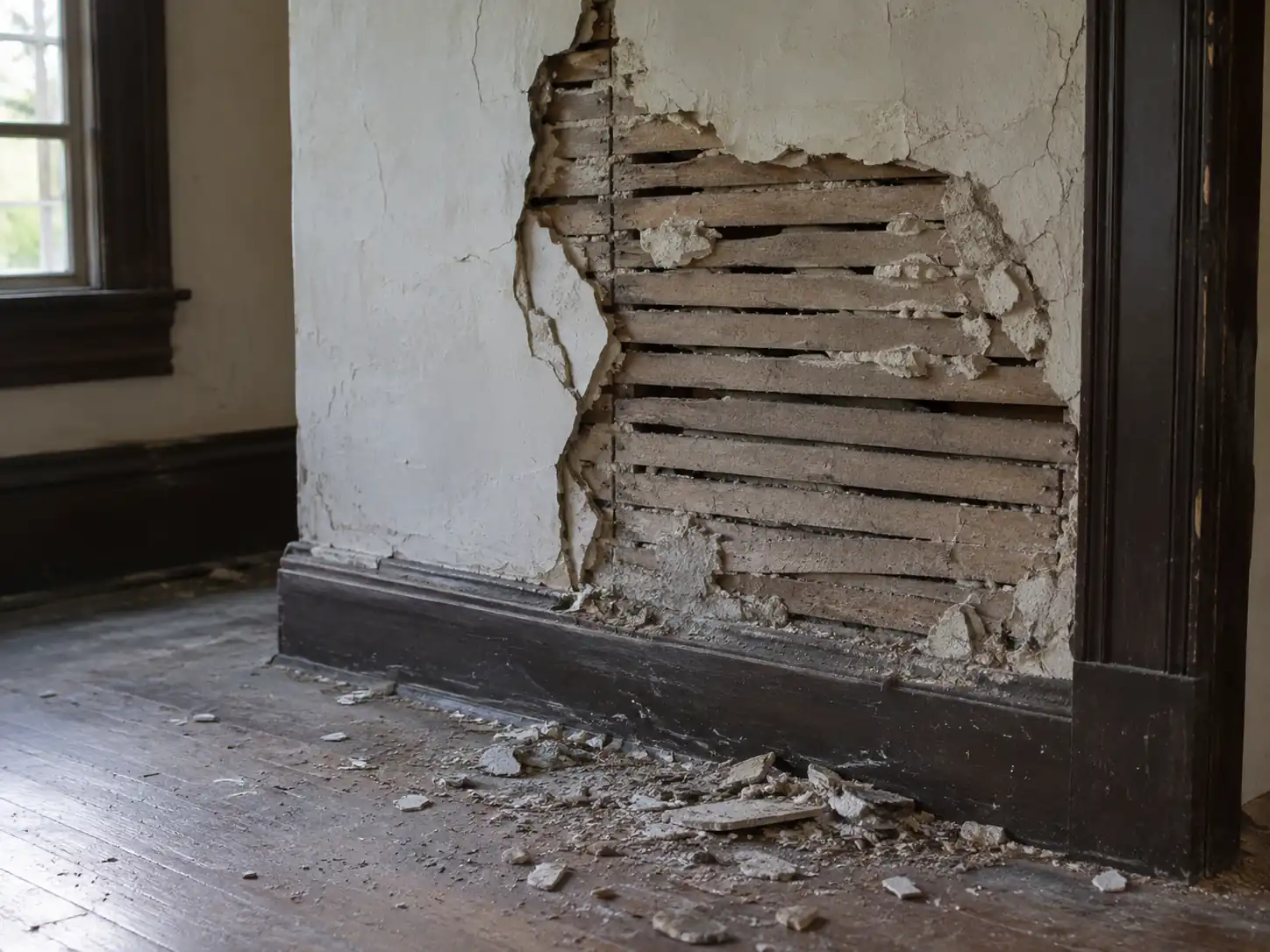
Failed lath and plaster wall with exposed wood lath and debris on hardwood floors in an old Heights house

Scale is the problem, not condition

Three and a half baths, a butler's pantry, a third floor and four thousand square feet of plaster to patch and paint. Nothing here is unusual work — there's just a great deal more of it than in a bungalow.

Tiers describe the general scale of the work, not a quote. Every house is different and prices move. Get a contractor estimate for your specific property — then compare that number, plus commission, plus the months of taxes and insurance while the work happens, against a cash offer. That comparison is the only one that matters.

What you're allowed to do with it

In the Heights, the exterior of your house isn't entirely your decision.

Shaker Heights was built as a planned community with design control from the beginning, and both cities maintain architectural review over exterior work. It's the reason these streets still look the way they do a hundred years on. It's also the reason a well-meaning cheap repair can turn into a much longer conversation than the owner expected.

Typically goes to review

  • Roof material and colour, especially replacing slate or tile with asphalt
  • Window replacement, and changes to divided lights or leaded glass
  • Siding, masonry and exterior paint colour in designated areas
  • Porch and entry alterations, railings, columns and steps
  • Additions, dormers, garages, decks and driveway changes
  • Fences, and in places even the style and height of them

What this means when you sell

  • A buyer planning to "just put a new roof on it" may not get the cheap option
  • Unpermitted past work can surface during the pre-sale inspection
  • Deferred exterior items can't always be resolved quickly, even with money
  • Timelines depend on meeting schedules, not on how fast a contractor can start
  • We buy with all of it outstanding and take the approvals on ourselves
  • You don't need to fix, file or attend anything before closing

Confirm the specifics for your address

What requires review, which board hears it, and how long it takes are set by each city and by whether your property sits in a designated district. Rules and schedules change. Call the planning or building department for your address before relying on any of this — or send us the address and we'll tell you what we're currently seeing in that city.

The holding clock

An empty Heights house is one of the most expensive things you can own.

Effective property tax rates in Cleveland Heights and Shaker Heights are among the highest in Cuyahoga County, which itself sits at the high end statewide. That's the trade for the schools and the services, and residents accept it. What families often don't anticipate is what that rate does to an inherited house that sits for a year while an estate gets sorted out.

Ohio bills property tax in arrears, so there's always a balance accruing that hasn't been billed yet. Add insurance — and a vacant-property policy costs more than a normal one — plus utilities you have to keep on so the pipes don't freeze, plus lawn and snow service so the city doesn't cite you, and the monthly carry on an empty four-bedroom becomes a real number very quickly.

One thing worth knowing: Ohio property owners can file a complaint with the county Board of Revision to challenge a valuation, and the filing window closes at the end of March. If you believe the county's value doesn't reflect the actual condition of the house, that's a conversation to have with a professional well before the deadline.

Ohio Rev. Code 5715.19 · Cuyahoga County Board of Revision — confirm current deadlines and rates

What accrues while the house sits

The costs that keep running whether anyone lives there or not.

  • Property taxesBilled in arrears, prorated against you at closing whenever that closing happens.
  • Vacant property insuranceStandard homeowner policies often won't cover an unoccupied house; the replacement costs more.
  • Heat you can't turn offA Heights house with radiators and old plumbing has to stay heated all winter or you risk a burst-pipe loss.
  • Maintenance the city expectsGrass, snow, gutters and exterior condition. Neglect turns into citations, and citations turn into liens.
  • Condition, quietly getting worseAn unheated, unwatched century house deteriorates faster than an occupied one. The offer follows the condition.
Where we buy

Both cities, every district.

Two adjacent cities with separate governments, separate school districts and separate inspection processes — and, block by block, very different housing. A working index of where we buy.

Shaker Heights

A planned garden suburb laid out by the Van Sweringen brothers, who built the rapid transit lines down the boulevards specifically to sell the houses. Nine official neighborhoods, strong design control, high taxes, and some of the best-preserved 1920s architecture in the country.

Fernway
Colonials and Tudors on tight, walkable streets around Fernway School.
Lomond
Slightly later, slightly smaller housing with a strong family market.
Ludlow
The historic Cleveland border neighborhood with a landmark community history.
Malvern & Mercer
Larger homes, deep lots, close to the Green Line.
Moreland
Denser stock near the Cleveland line, including two-family homes.
Onaway & Sussex
Some of the grandest older houses in the city, and the biggest repair bills.
Boulevard
North of Shaker Boulevard toward the lakes and the Cleveland Heights line.
Van Aken District
The rebuilt town center, plus the condos and townhouses around it.

Cleveland Heights

Older, larger and more varied than its neighbour — mansions on the boulevards, bungalows and doubles a few streets away, and three separate walkable business districts. Roughly the same era of construction, with much less uniformity and a wider range of condition.

Cedar Fairmount
The University Circle edge: apartments, doubles and stately singles.
Coventry Village
Dense, eclectic, heavily rented, and full of century doubles.
Cedar Lee
Walkable district housing, strong buyer demand, older systems throughout.
Fairmount & North Park
The boulevard estates. Large, ornate, and expensive to carry.
Forest Hill
The Rockefeller-era development, with its distinctive slate-roofed houses.
Noble & Nela
Smaller homes near the East Cleveland line, and a lot of tired rentals.
Severance
Post-war and mixed stock around the old Severance area.
Taylor & Oxford
Compact singles and doubles, popular with small landlords.

We also buy in University Heights, South Euclid, Beachwood, Lyndhurst, Richmond Heights, East Cleveland and across Cleveland's east side. Send the address and we'll confirm the same day which city you're in and what its process looks like right now.

Decide honestly

Three questions that tell you whether to list or sell direct.

The Heights have real retail demand. Plenty of houses here should be listed, and we'll say so on the phone rather than waste your afternoon. Work through these three honestly and you'll know which side you're on before you call anyone.

  1. Can the house pass an inspection without major work?

    If yes

    List it. A sound Heights house on a good street will draw genuine competition, and a cash offer won't beat that. Interview two local agents who actually sell in your district and ask what they'd do first.

    If no

    Get both numbers. Price the roof, the electrical and the boiler properly, then compare the total — plus commission and carrying costs — against a cash offer. The gap is usually smaller than people assume.

  2. Can you comfortably carry it for six more months?

    If yes

    Time is on your side. You can do the work, wait for the right season, and hold out for the right buyer. Nothing is forcing a discount, so don't take one.

    If no

    Certainty is worth paying for. With Heights tax rates, insurance and winter heat, six months of carry on an empty house is a serious figure — often more than the difference between the two offers.

  3. Is anyone in a position to manage a renovation?

    If yes

    The renovated price is reachable. Someone local, with time and contractor relationships, can capture most of the spread themselves. That's a legitimate way to make more than we'd pay you.

    If no

    Sell it as it is. Managing a plaster-house renovation from another state, around a job, or while grieving a parent is how projects stall and budgets double. There's no shame in handing it over.

Heights seller questions

What owners here ask before they sell.

Both cities inspect residential property before it transfers and issue a violation report the owner is expected to resolve. They're separate municipalities running separate programs with separate fees, forms and schedules, so confirm current requirements with the building or housing department for your specific address. When you sell to us, the violation list becomes ours as the buyer — you don't fund repairs or an escrow out of your proceeds.

Not to us, but it's the single most common reason a Heights retail sale collapses. Replacing slate in kind is very expensive, asphalt may raise a design review question in some areas, and insurers increasingly decline coverage over roof age — which ends a mortgage buyer's deal before closing. We buy with the roof exactly as it is and price it in up front rather than re-trading you after an inspection.

Review governs exterior work rather than the sale itself, but it matters in two ways: unpermitted past work can surface during the pre-sale inspection, and a buyer who assumed they could make cheap exterior changes may reconsider. Selling to us removes both problems — we take the outstanding items and any approvals on ourselves, and you don't need to file anything or attend a meeting.

Start with a probate attorney, because authority to sell is what sets the whole timeline — Ohio has faster routes for smaller estates, and a recorded transfer-on-death affidavit avoids probate entirely. In parallel, make sure the house stays heated and insured as a vacant property. We can walk it by video, contract now and close when the court authorizes, and you can leave everything inside.

Effective rates in both cities are among the highest in Cuyahoga County, largely reflecting school and municipal levies. If you believe the county's valuation is higher than the house's actual condition supports, Ohio lets property owners file a complaint with the county Board of Revision, and the window closes at the end of March. Confirm current deadlines and talk to a tax professional or attorney — it's a genuine option, not a quick fix.

We buy both. Large houses on Fairmount, North Park, Onaway and Sussex are exactly where the value-versus-repair gap gets widest, which is why they sometimes sit on the market for months. We also buy Coventry and Moreland doubles, Noble bungalows and Van Aken condos. Property type doesn't decide it — condition, title and your timeline do.

Quite possibly, and we'll tell you so. Both cities have real buyer demand, and a sound house on a strong street should be listed. Cash tends to win when the house needs major systems, when an inspection already failed, when nobody local can manage a renovation, or when the family needs a certain closing date more than the last few percent of price.

Yes. Coventry, Moreland and the Taylor Road streets are full of century doubles, and we buy them occupied, behind on rent, or mid-eviction. Existing leases continue after transfer and security deposit obligations follow the property, so bring the leases and whatever rent records you have. Pre-1978 lead obligations come with the building to us.

No commission, no repair costs, and we cover standard seller closing costs. What does come off is what's already owed against the property: mortgage payoff, prorated Cuyahoga County taxes, liens, any certified utility balances, and the county conveyance fee. Ask for the estimated settlement statement before you sign — every figure should be in writing before you commit to anything.

Free, nothing to sign, and take it to an agent — please do. Ask them for a realistic as-is number and a renovated number, then put all three side by side with the repair estimate and the carrying costs. We'd rather lose a deal to a well-informed decision than win one from someone who didn't check.

Get a cash offer on your Cleveland Heights or Shaker Heights house.

Tell us the address, the city, and what's actually wrong with it. We'll pull the parcel, walk the house, and come back with a real number and the reasoning behind it — usually within a day of the visit.

  • Slate roofs, failed boilers, knob-and-tube and plaster — all priced in, not re-traded
  • The city inspection list and any review items become ours as the buyer
  • Estates, vacant houses, doubles with tenants and out-of-state heirs
  • Taxes, liens and payoffs settled from proceeds at closing
  • No commissions, no repairs, and a closing date you choose

Sell Fast Buyers Cleveland is a private real estate investment company that purchases property directly from owners. We are not a licensed real estate brokerage and do not list homes for sale. Offers are made property by property after review and are not guaranteed. Municipal inspection and architectural review requirements, tax rates, county fees and statutory references described on this page are general information current at the time of writing and are set by the relevant city, county or state — confirm details with the applicable authority before relying on them. Cost tiers describe the general scale of typical work and are not estimates for any specific property. Nothing on this page is legal, tax or financial advice.